
Children these days face numerous pressures and distractions, from schoolwork and extracurricular activities to social media and peer relationships. Teaching mindfulness to kids can help them develop the tools they need to relax, focus, and manage stress effectively. Here are some techniques that can help children cultivate mindfulness in their daily lives.
Understanding Mindfulness
Mindfulness is the practice of paying attention to the present moment with an open and non-judgmental attitude. For children, this means being aware of their thoughts, feelings, and surroundings without getting overwhelmed by them. Practicing mindfulness can help kids improve their concentration, emotional regulation, and overall wellbeing.
Benefits of Mindfulness for Kids
- Enhanced Focus: Mindfulness helps children improve their attention span and focus on tasks, making learning more effective.
- Emotional Regulation: It teaches kids to recognize and manage their emotions, reducing anxiety and promoting a positive outlook.
- Stress Reduction: Mindfulness techniques can help children relax and cope with stress, leading to better mental health.
- Improved Behavior: Regular mindfulness practice can lead to more self-control and better behavior in various settings.
Mindfulness Techniques for Kids
1. Belly Breathing:
How to Do It: Have your child lie down comfortably and place a small stuffed animal on their belly. Ask them to take slow, deep breaths in and out, watching the stuffed animal rise and fall with each breath.
Benefits: Belly breathing helps children focus on their breath and calm their nervous system, reducing stress and promoting relaxation.
2. Mindful Listening:
How to Do It: Sit with your child in a quiet space. Close your eyes and listen to the sounds around you. After a few minutes, discuss the different sounds you both heard.
Benefits: This exercise enhances children’s awareness of their environment and improves their ability to concentrate.
3. Body Scan:
How to Do It: Guide your child through a body scan meditation. Starting from their toes, ask them to focus on each part of their body, moving up to their head, and notice any sensations.
Benefits: The body scan helps children develop a deeper connection with their physical sensations and promotes relaxation.
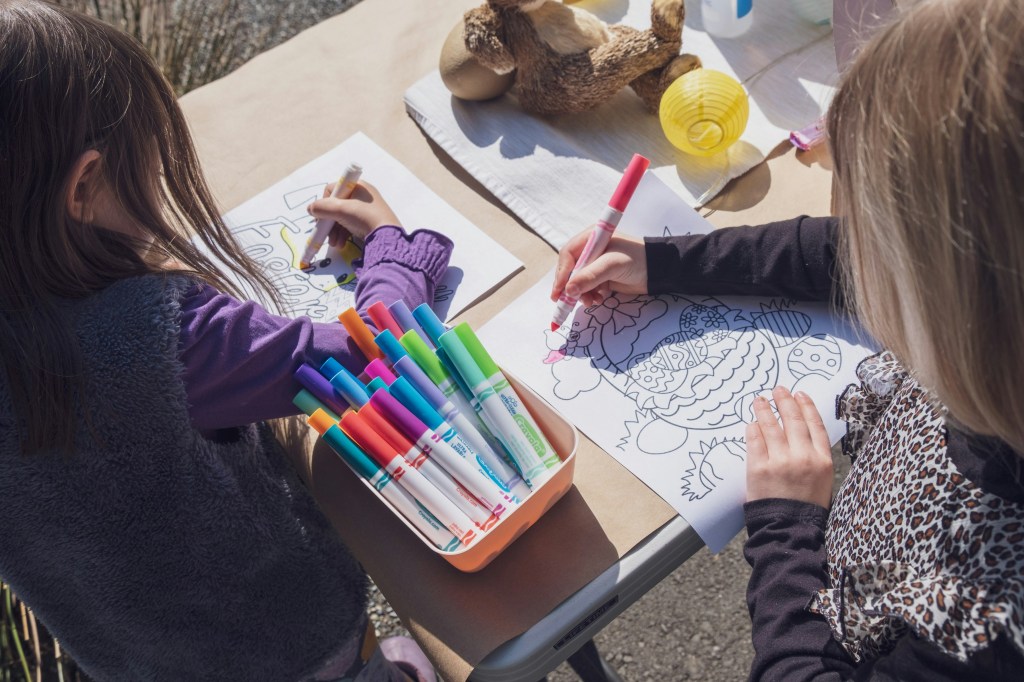
4. Mindful Coloring:
How to Do It: Provide your child with coloring materials and encourage them to color mindfully, focusing on the colors and patterns they create without worrying about the outcome.
Benefits: Mindful coloring can be a calming activity that enhances focus and creativity.
5. Glitter Jar:
How to Make It: Fill a jar with water, glue, and glitter. Shake the jar and watch the glitter settle.
How to Use It: When your child feels overwhelmed, ask them to shake the jar and watch the glitter swirl and settle. This visual representation can help them understand how their thoughts and feelings can calm down with time.
Benefits: The glitter jar is a visual and tactile tool that teaches children about settling their minds and emotions.
6. Mindful Eating:
How to Do It: During a meal or snack, encourage your child to eat slowly and mindfully, paying attention to the taste, texture, and smell of their food.
Benefits: Mindful eating helps children develop a healthy relationship with food and enhances their sensory awareness.
7. Five Senses Exercise:
How to Do It: Ask your child to notice five things they can see, four things they can touch, three things they can hear, two things they can smell, and one thing they can taste.
Benefits: This exercise grounds children in the present moment and reduces anxiety.
Tips for Parents
- Be a Role Model: Practice mindfulness yourself to set an example for your children.
- Create a Routine: Incorporate mindfulness exercises into your child’s daily routine to make it a habit.
- Make It Fun: Use games and activities to keep mindfulness engaging and enjoyable for kids.
- Be Patient: Mindfulness is a skill that takes time to develop. Encourage your child gently and celebrate small successes.
Teaching mindfulness to children can equip them with valuable tools to navigate life’s challenges with resilience and calm. By incorporating simple mindfulness techniques into their daily routine, you can help your child develop focus, emotional regulation, and a sense of inner peace. Start with small steps, and enjoy the journey of mindfulness together.
 Mind Energy Station | Holistic Wellness, Crystals, & Meditation Guide
Leave a comment